Historical Context and Heritage
Our parent company, UkrFiber, has traveled an impressive development path, which can be divided into several key stages:
• 2002-2006: The Formative Period
Foundation of the manufacturing company UTEX (2002)
Creation of the Nevalon Fiber installation division (2003)
Formation of the first professional teams (2004)
Launch of training and certification programs (2004)
Beginning of national expansion in Ukraine (2005)
• 2007-2013: The Standardization Stage
Implementation of a quality control system
Development of internal installation standards
Creation of safety regulations
Expansion of the service portfolio
• 2014-2021: Reaching the International Level
Beginning of cooperation with European Telecom Giants
Work with Deutsche Telekom, Orange Polska, Magyar Telekom
Adaptation to European quality standards
Formation of international teams
• 2022-2024: The Transformation Period
Adaptation to new market conditions
Revision of business processes
Preparation for entering new markets
Competitive Advantages of Nevalon Fiber
Nevalon Fiber enters the American market with a unique set of competitive advantages:
3.1. Heritage and Innovation
We combine time-tested technologies with modern management approaches. Our experience working in various countries and climatic conditions allows us to effectively solve tasks of any complexity.
3.2. Full-Cycle Expertise
Thanks to close integration with the UTEX production division, we possess a deep understanding of the entire lifecycle of fiber-optic infrastructure—from cable manufacturing to its installation and maintenance.
3.3. Cross-Cultural Competence
Our experience in different markets has taught us to communicate effectively with clients from diverse cultural backgrounds and understand their specific requirements.
Technological Infrastructure and Methodologies
4.1. Quality Management System (QMS)
We have implemented a comprehensive quality management system that includes:
• Design with a long-term perspective
• Multi-level control at all implementation stages
• Regular audits and certification
• Continuous process improvement
4.2. Advanced Monitoring Technologies
Our technology platform includes:
• Computer-Aided Design (CAD) systems
• GIS platforms for asset management
• Real-time monitoring systems
• Project management platforms
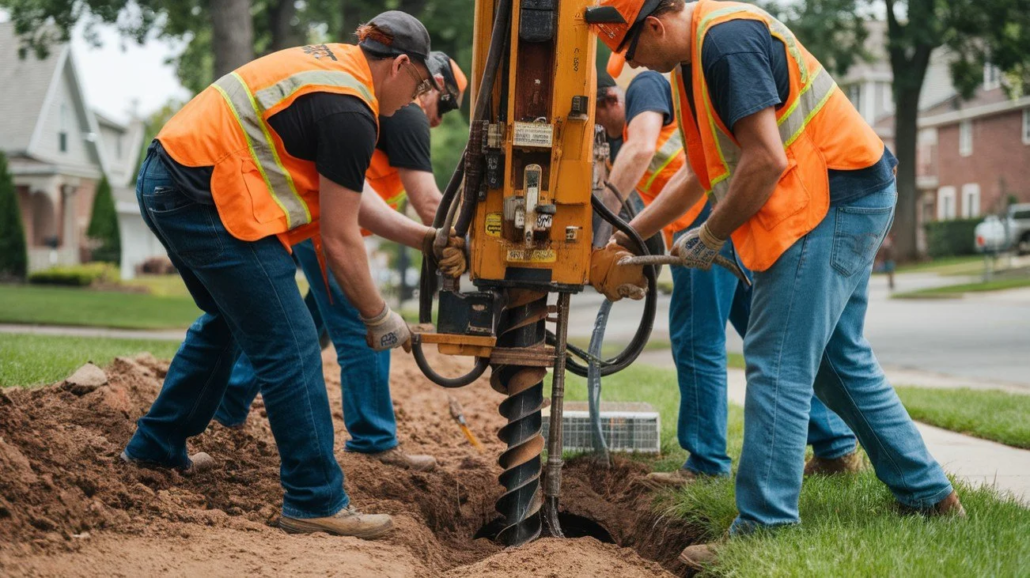
4.3. Construction Methodologies
We apply various techniques depending on the conditions:
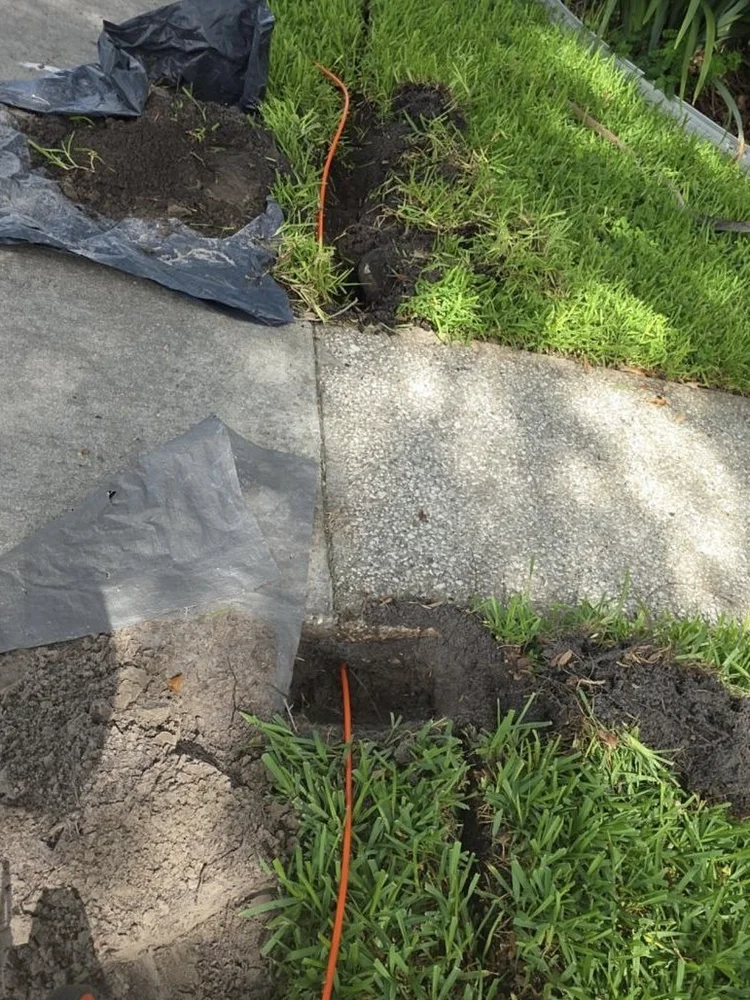
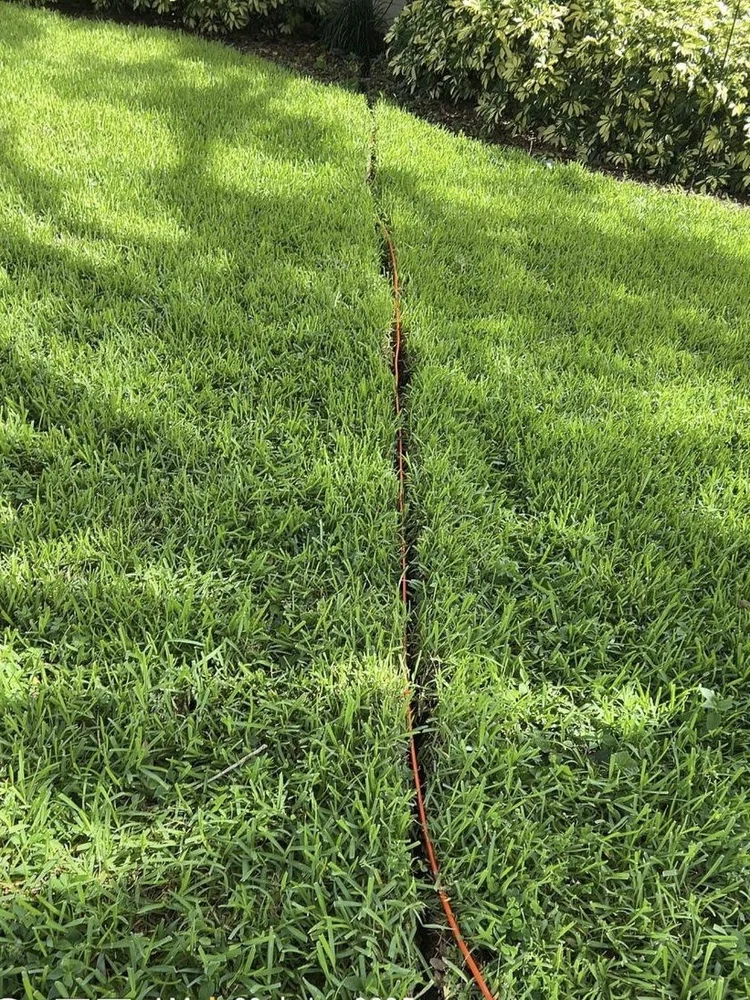
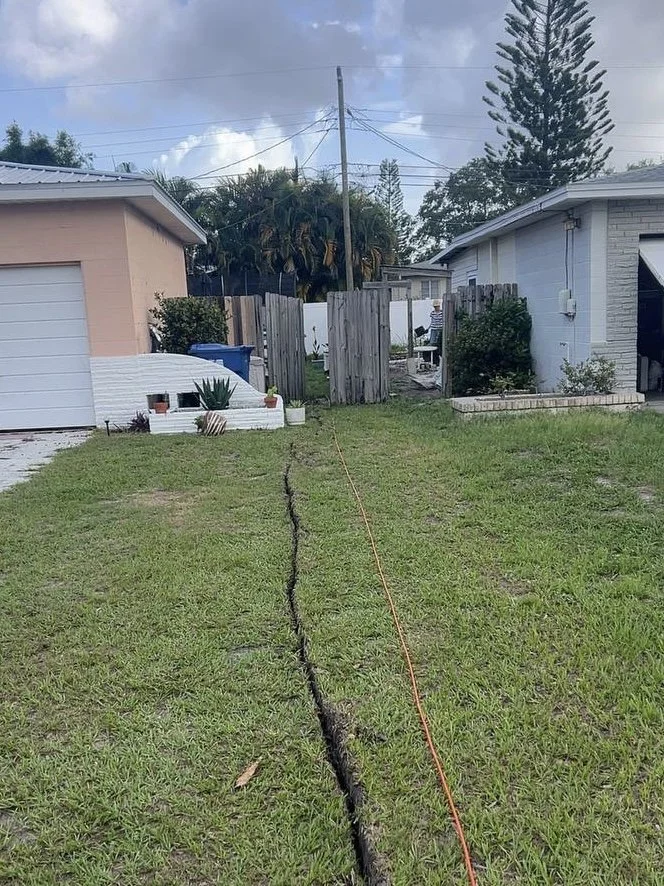
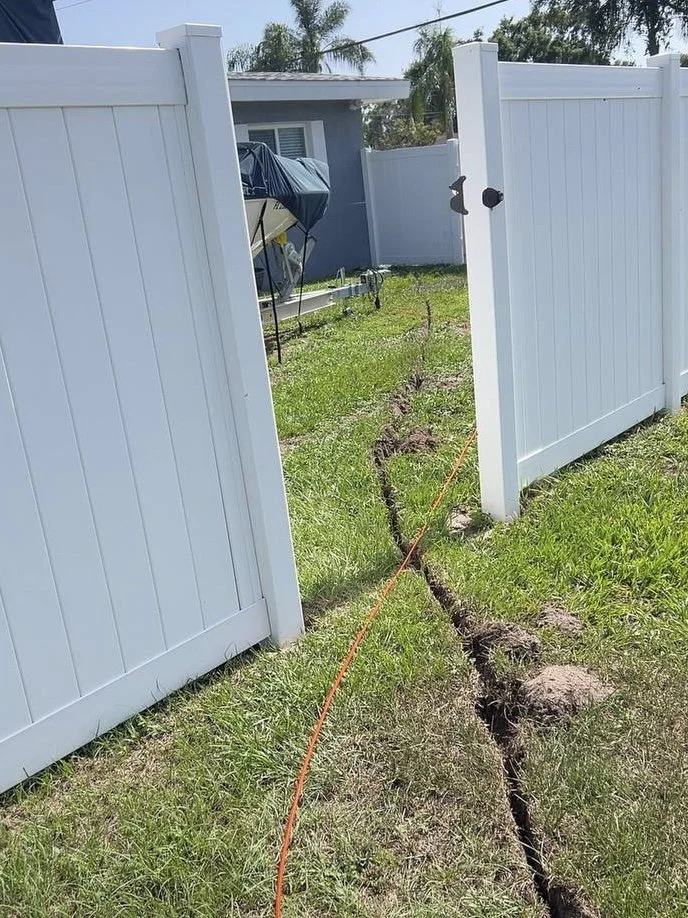
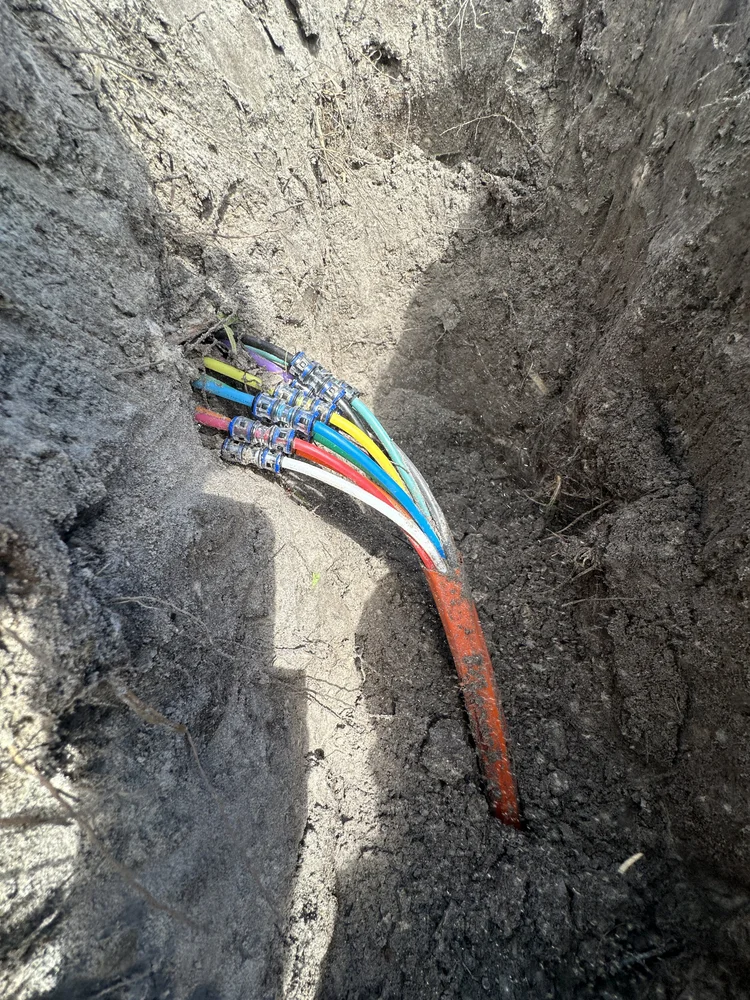
• Micro-trenching in urban environments
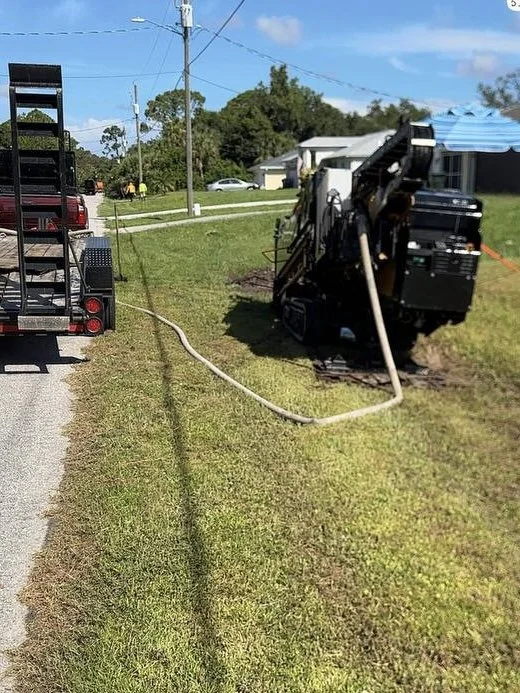
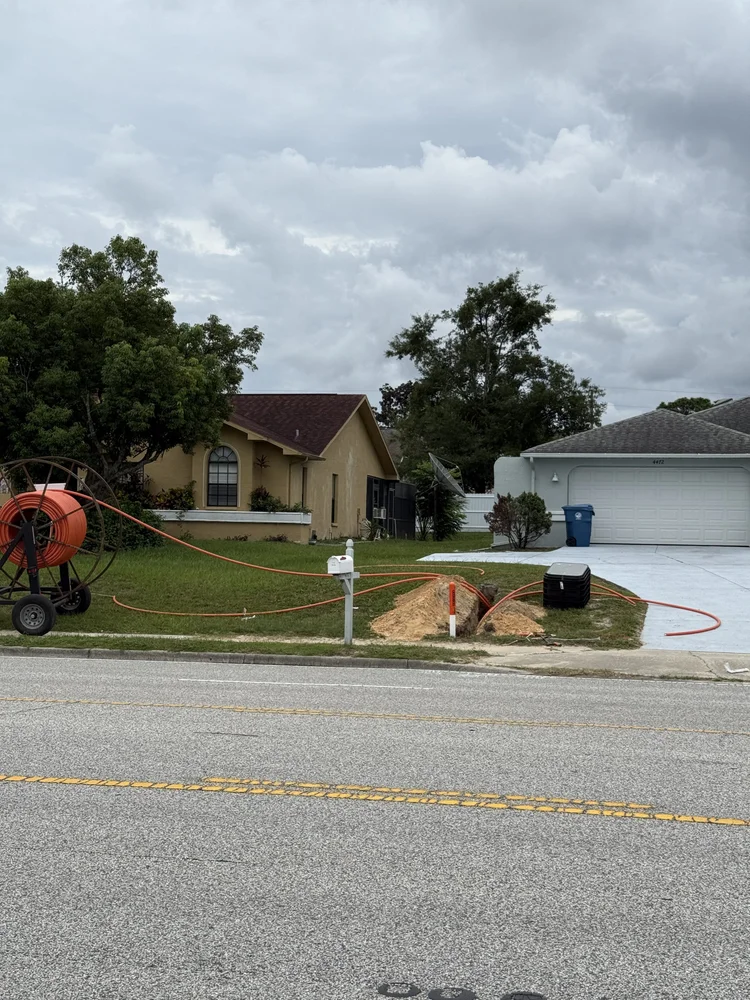
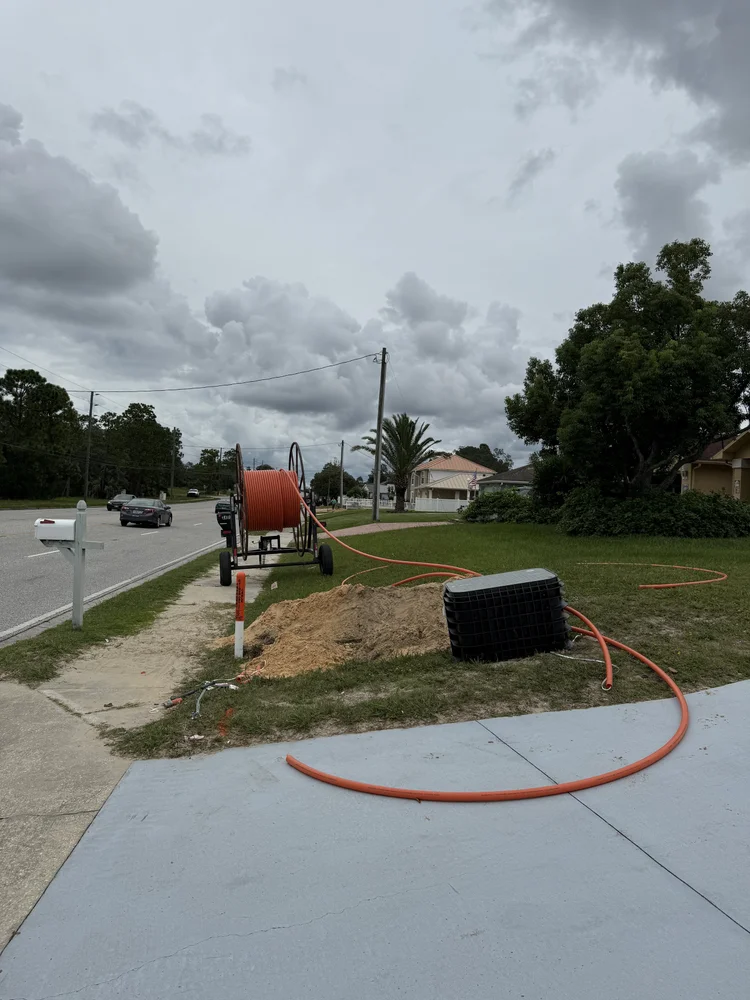
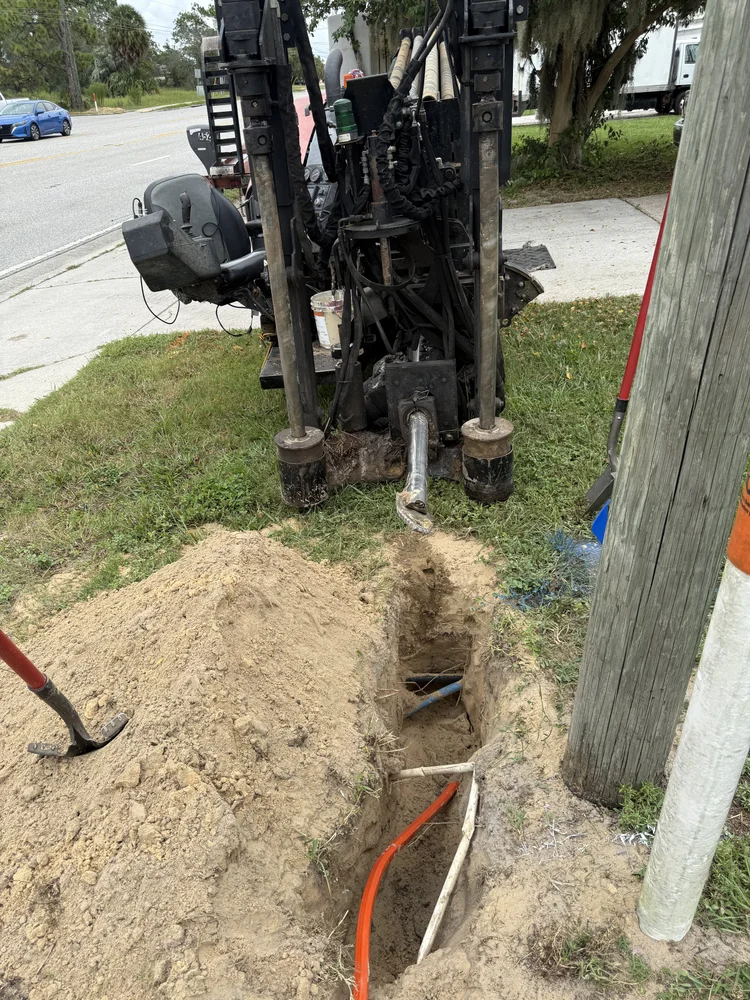
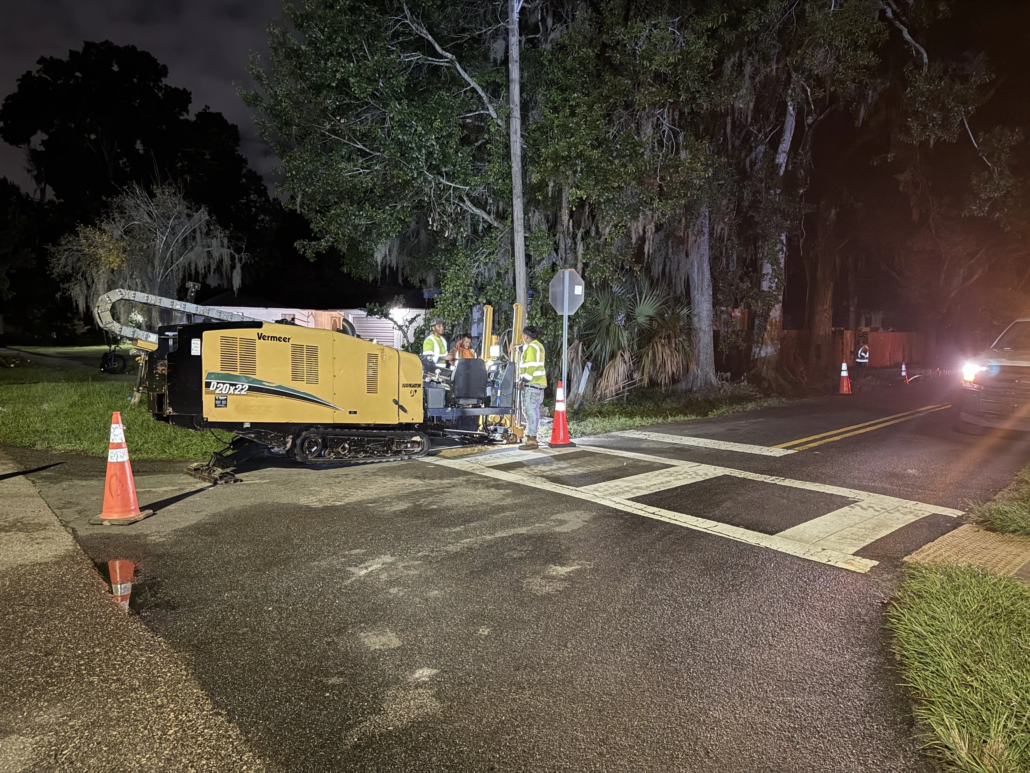
• Directional drilling for crossing obstacles
• Aerial installation on difficult sections
• Combined approaches for cost optimization
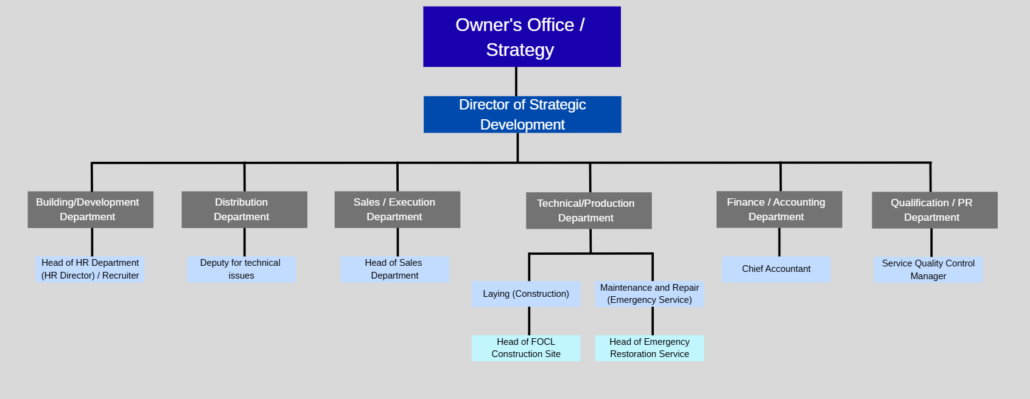
Organizational Structure and Project Management
5.1. Project Management Framework
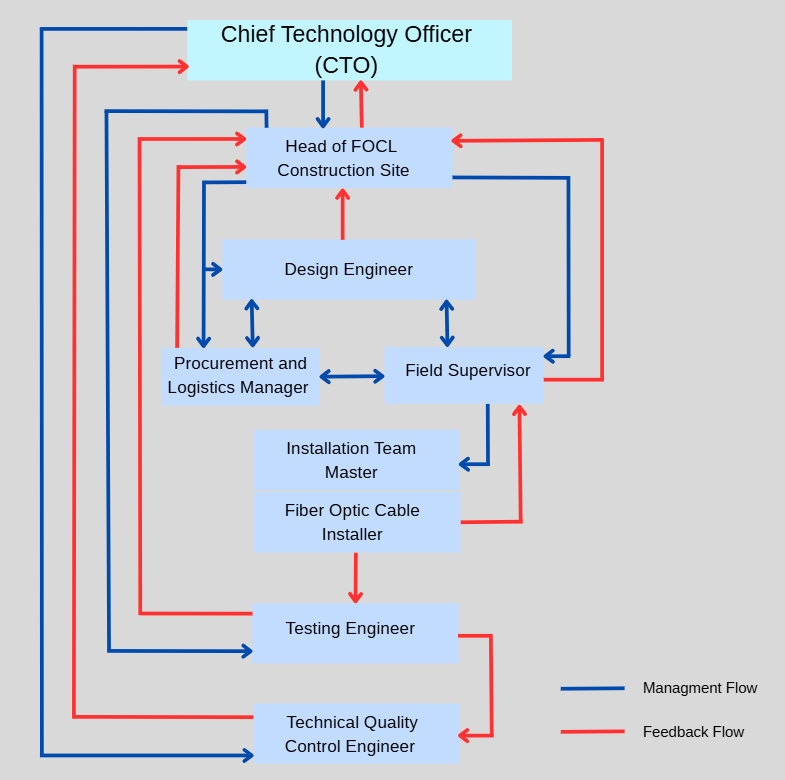
Our project management system is built around a clear distribution of roles and responsibilities:
• Project Manager — single point of accountability to the client
• Construction Manager — control of construction works
• QA/QC Engineer — quality assurance
• Field Supervisor — on-site management
• Safety Officer — compliance with safety standards
5.2. Communication Model
We ensure communication transparency through:
• Weekly progress reports
• Monthly project review meetings
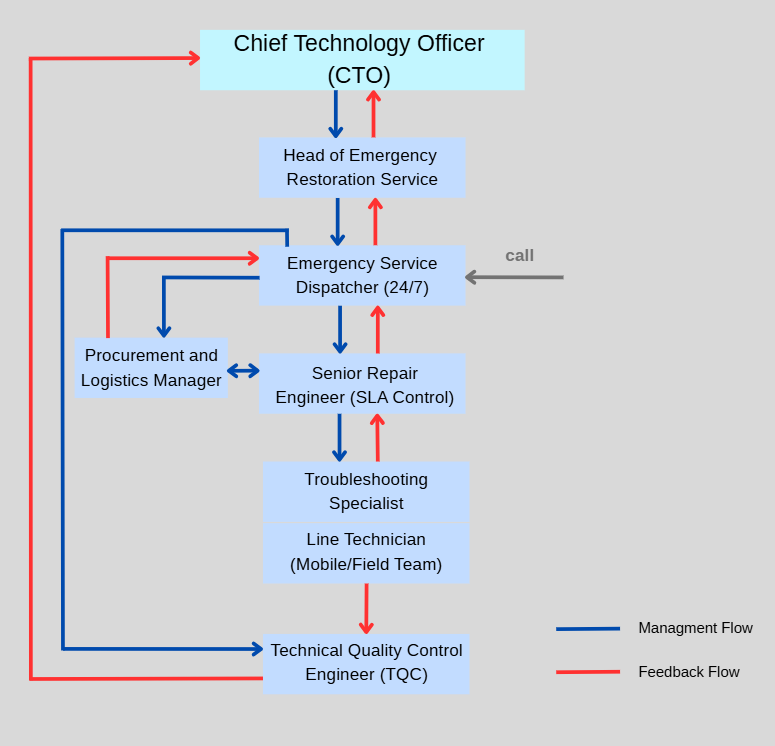
• 24/7 emergency communication channel
• Online access to project documentation
5.3. Risk Management
Our risk management system includes:
• Proactive identification of potential problems
• Development of action plans for different scenarios
• Regular risk reviews
• Liability insurance
Quality Control and Work Performance Standards
6.1. Technological Control
Each work stage is accompanied by strict control:
• Incoming inspection of materials and equipment
• Operational control during work execution
• Acceptance control of completed stages
• Final acceptance with client participation
6.2. Measurement Procedures
We use modern measuring equipment:
• OTDR reflectometers for fiber analysis
• Optical power meters
• Chromatic dispersion analyzers
• Polarization mode dispersion testing systems
6.3. Documentation
Our documentation system ensures:
• Complete traceability of all operations
• Parameter recording at each stage
• Creation of as-built documentation
• Archiving of measurement results
Environmental and Social Responsibility
7.1. Sustainable Development
We adhere to the principles of sustainable development:
• Minimizing environmental impact
• Using eco-friendly materials
• Reducing energy consumption
• Waste recycling
7.2. Community and Safety
Our safety policy includes:
• Safety training programs
• Regular staff briefings
• Hazard alert system
• Civil liability insurance
Development Prospects and Innovations
8.1. Strategic Directions
Our priorities for the coming years:
• Development of 5G and IoT networks
• Implementation of Smart City technologies
• Development of cloud solutions
• Integration with AI systems
8.2. Innovative Projects
We are actively working on:
• Automation of monitoring processes
• Implementing machine learning for failure prediction
• Developing energy-efficient solutions
• Creating universal management platforms